First-party use only
TTV Ad Engine is used by authorized TAEKWONDO.TV personnel for TTV-owned advertising accounts. It is not offered to agencies, advertisers, athletes, event organizers, or other external users.
TTV Holdings LLC
A private, internal paid-media control plane used only to research, prepare, review, and audit advertising for TAEKWONDO.TV's own accounts.
Company and purpose
TTV Holdings LLC owns and operates TAEKWONDO.TV, an independent taekwondo sports-data and media business. The public product helps people find athlete profiles, tournament schedules, draws, results, rankings, match histories, and related editorial coverage.
TTV Ad Engine is used by authorized TAEKWONDO.TV personnel for TTV-owned advertising accounts. It is not offered to agencies, advertisers, athletes, event organizers, or other external users.
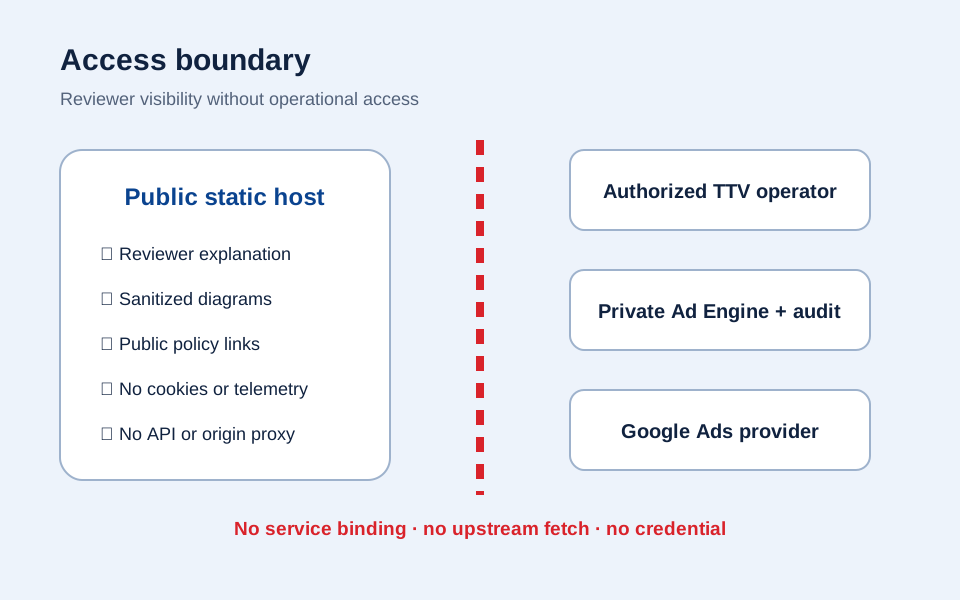
There is no public account creation, sign-in, billing, third-party account management, campaign mutation endpoint, database connection, or credential on this host.
The business use is to help people already searching for taekwondo athletes, tournaments, schedules, draws, results, rankings, and histories reach the corresponding canonical TTV destination or released app handoff.
Google Ads API functions
Safety model
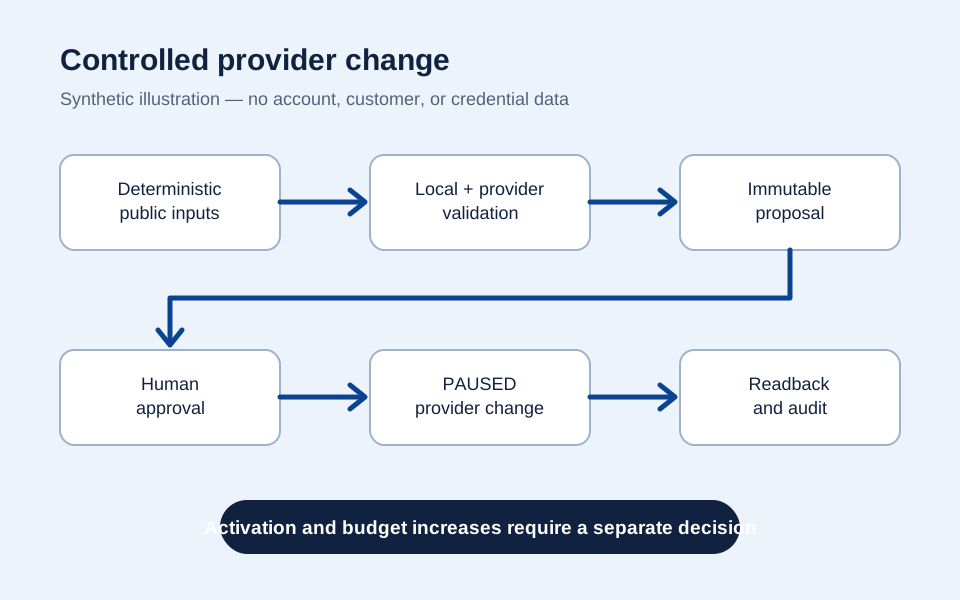
There is no autonomous budget increase, activation, deletion, recursive optimization, or permission to spend. Standard Access changes throughput only; it does not relax TTV's proposal, approval, PAUSED-create, readback, budget, destination, privacy, or measurement controls.
Why Standard Access is requested
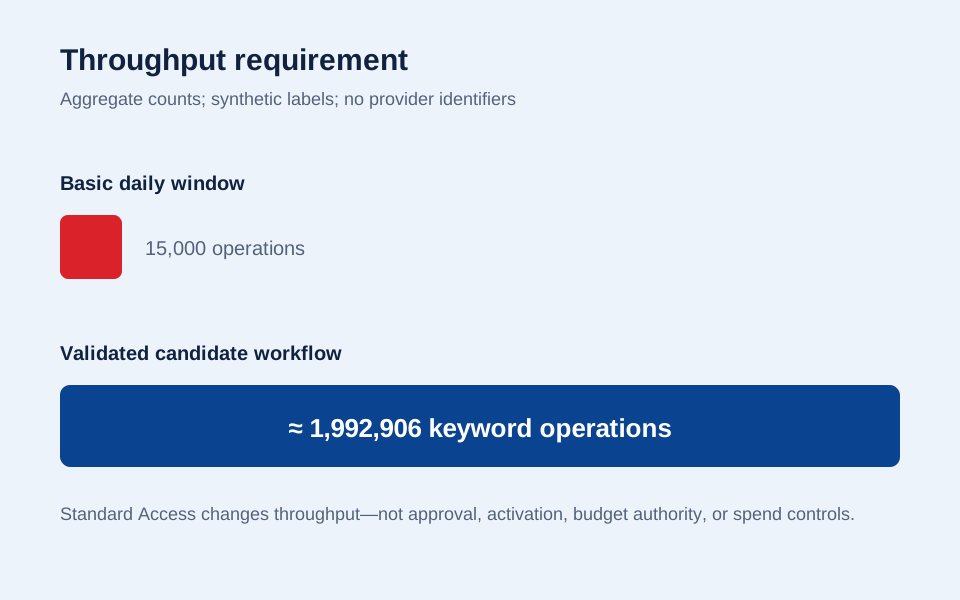
The current canonical candidate build contains 996,453 deduplicated exact-match athlete and tournament terms across nine released website locales. TTV's safety workflow validates the intended provider payload before a separately approved creation, so full validation plus creation is approximately 1,992,906 keyword operations before supporting objects and later management.
Higher quota is required to make deterministic review, validation, controlled onboarding, and later status management operationally feasible. It does not mean that the complete inventory will be activated simultaneously. TTV introduces bounded cohorts and stops expansion when provider reconciliation, destination health, relevance, attribution, or spending guardrails fail.
Sanitized evidence
Authentication and privacy
Google Ads API access belongs to TTV's approved Google Cloud project. OAuth or service-account material, provider account identifiers, token history, private paths, proposal hashes, and credentials are never published here.
The integration does not export raw TTV email addresses, phone numbers, usernames, internal user IDs, payment data, customer lists, private content, or raw user search strings to the advertising provider.
This documentation includes no analytics tag, ad tag, consent manager, cookie, local storage, service worker, fingerprint, third-party application script, browser SDK, or application telemetry. TTV's existing Cloudflare security layer may inject a same-origin browser-verification script for non-verified traffic; it grants no access to TTV data or APIs.
Company references
Google Ads API review correspondence is handled through TTV's monitored role-based company contact at contact@taekwondo.tv.